Loire Valley
François Cotat - New
Sancerre (Chavignol)
Background
The elusive François Cotat produces some of the best white wines in France and so they are very hard to find. There are three things that define François Cotat’s wines. Firstly the superb Kimmeridgean terroir around the famed village of Chavignol and specifically it’s vertiginously steep vineyard, Les Monts Damnés. Secondly,his vineyards are planted at a density of 8000 vines per hectare – higher than the more normal average of 6000 vines per hectare & with average yields of 45 hl/ha, far lower than Sancerre’s ‘rendement de base’ of 65 hl/ha.Thirdly, that he is often the last to harvest, sometimes a week later than his peers and this, combined with his meagre yields, provides sublime and incomparable quality.
The Cotat family has tended both Sauvignon Blanc and Pinot Noir on the slopes of the Monts Damnés in Chavignol since the end of the second World War; it was only in the 1990s when two brothers, Paul and Francis, handed over the family domaine to their sons, François and Pascal, respectively. Today there are two Cotat domaines — one in Chavignol, headed by François, and one in Sancerre, run by Pascal. What sets these cousins apart is less important than what they share—a passion for natural winemaking and a truly amazing touch with Sauvignon Blanc.
Now François looks after the three hectares that belonged to his father, while his cousin Pascal has 2.5 hectares. François has vines on La Grande Côte, the Cul de Beaujeu and the Mont Damnés on very steep clay-limestone slopes around Chavignol. He also has a parcel of younger vines on the caillottes between Chavignol and Sancerre on lower, more gently sloping land. The caillottes is pure limestone with little or no soil. François made his first vintage from these vines in 2005. François uses natural yeasts, no debourbage, no sulphur during fermentation and only one battonage after the fermentation has finished.
François uses organic fertilisers and racks according to the phases of the moon. The wines develop with age and, in the best vintages, can be cellared for more than 20 years.
Wines
Soils in Chavignol share the same chalky heart as Chablis; this "terre blanche" imparts a steely, mineral-rich back-bone to François' single-vineyard cuvées "Les Monts Damnés", "Les Culs de Beaujeu" and "Grande Côte". Yet at the same time there are wines that show a glycerin-like texture in the mouth, a wonderfully fleshy sweetness that is seldom seen with Sauvignon.
Sébastien Brunet - New
Vouvray

Background
I have been on a mission for some time to find the "right" Vouvray to fit in to my portfolio but when it comes to Vouvray I'm extra fussy. I wanted something fine, mineral, fresh, mouth-watering, concentrated and dry.
After four years and having tasted many I am happy to say that I found it this year in the brilliant wines of Sébastien Brunet. Sébastien assumed control of his family domaine in 2006 following the untimely passing of his father, and has quickly become one of the Loire's fastest rising stars.
Sébastien comes across resolute, serious and thoughtful and his methods are exacting, precise and demanding. You can taste it in his wines which show clarity and freshness with a defined linearity and toothsome mineral finish.
All of his vine plots are on the outskirts of the village of Chançay, where Sébastien has set up a new cellar in a labyrinth of caves carved into a chalky hillside. No machines and no chemicals used at Domaine Brunet, instead Sébastien works his parcels by hand and employs only natural treatments. These are outstanding wines by any standard and truly such good drinking that his bottles are hard to keep your hands off!
Wines
There is an impossibly fresh and moreish Pétillant that displays bright minerality on the nose and is lemony, pithy,fresh and mouthwatering - the fact that is has a fine moussy bead just makes you want to drink more and more. The Vouvray Sec 'Arpent' is properly dry, racy and mineral and has a wonderfull green apple freshness and fine balance. It's just the kind of Vouvray I like and they are hard to find.
Nicolas Reau - New
'Clos de Treilles' in Anjou
'Les Champs Vignons' in Chinon

Background
The tall, imposing ex-Rugby player Nicolas Reau is not someone, at first glance, that you might associate with fine, detailed wines. I had spotted him over the past few years at the various tastings I attend during my trips to France and so I made a beeline this year to taste them.
As a wine importer I find that generally every year there is one producer who's wines you just have to have and this year Reau was that one producer. These were wines that made me smile and I went back twice to make sure!
Cabernet Franc is a grape that I admire for it's ability to embody the elegance and transparency of great Burgundy, the depth and class of good Bordeaux, and also the cool minerality of it's Loire Valley roots.The best examples such as those from Nicolas Reau are attractive, elegant wines of substance and precision.
Rabelais sung the praises of Chinon wine in his satires Gargantua and Pantagruel, and his vivid descriptions of wine-soaked feasts and revelries have made him a paragon of the "eat, drink and be merry" lifestyle. Rabelais is credited with a saying heard often in Chinon, "Beauvez toujours, vous ne mourrez jamais," roughly translated as "drink always and never die."
Wines
Nicolas farms in two areas, the Clos de Treilles in Anjou and also the Domaine Champs de Vignons in Chinon where he also makes the wines. Everything here is based on diligence and respect - respect of the terroir and of the vines (which are framed organically of course).
Nicolas is a free spirit with an apetite for life and it shows in his brilliant wines which are vital, pure, vivid and most importantly, delicious.
Domaine du Collier
Saumur
BackgroundWithin a short period of time Antoine Foucault is already making some of the most exciting wines in the Loire Valley. The Domaine du Collier was created in 1999 by Antoine (son of Charly Foucault from the famed Clos Rougeard) and Caroline Boireau. Having worked at Clos Rougeard for four years and at the ripe old age of 26 he took the opportunity to buy four-hectares of vines in the commune of Brézé in the lieu-dit of La Ripaille. The estate comprises 6 hectares with the majority of the estate planted to Chenin Blanc (including some 100 year old vines) and the balance with Cabernet Franc.
Antoine is dedicated to natural viticulture, without the use of chemical treatments, fertilizers, or weed killers. The harvest is manual with strict sorting carried out in the vineyards. In his deep cellar, Antoine does not use commercial yeast, and doesnít treat the wine with sulfur until bottling. The results are brilliant and it is probably no surprise that demand for them is very high and as a result they can be very hard to find.
WineThree wines are produced at Domaine du Collier: Saumur Blanc is from low yeilding (30hl/ha) mature (20-75 years) vines grown on predominantly clay limestone soils and is a very powerful and complex wine even when young. As with all great Chenin (as this is) though the magic happens as the wines age and evolve and this will do so magnificently.
The Saumur Blanc "La Charpenterie", from the oldest (100+ yr) vines, which delivers more concentration and the extra dimesion that old vines deliver. It is a fabulous, fabulous wine.
Saumur Rouge "La Ripaille" is a masterful take on Cabernet France, a very diffcult grape to master. It has a booming resonance yet remains incredibly precise and finely detailed and needless to say that fans of the wines of the Clos Rougeard will find lots to like - and with the wines above too; these are special wines.
Domaine Belle Vue
Muscadet
After a disastrous frost in 1709 wiped out most of the mediocre red grapes that were originally planted around Nantes, Louis XIV ordered the growers to come up with a white replacement. They chose a Burgundian grape called the melon, actually an offshoot of Gamay, the grape of Beaujolais.
Jerome Bretaudeau set up on his own in 2005 having made wine for others for the previous 10 years. His Domaine de Belle-Vue is one of the leading lights in the region and the quality of his wines is outstanding. The underground buzz on these wines in France is red hot.
Three things set him way apart from the rest and are the reason that his wines are so good; he harvests by hand, his vines yield only 35hl/ha (in a region where 90hl/ha is normal!) and he only uses the available natural yeasts for fermentation. With these principles in mind, Bretaudeau stands beside others in our portfolio like Belliviere, Tue-Boeuf and Foillard.
He has 8 hectares in the Muscadet Sevre et Maine AOC in two separate plots. The first has clay soils and vines planted between 1950 and 1960; it's the larger of the two and produces a softer, more generous wine - still briny, steely and mineral, it has an attractive green apple flavour and is deliciously thirst quenching.
The second has granite soils and vines planted in 1920; this produces very fine, very mineral wine; tight as a drum yet silken and sensual, it tastes of flint and flowers and is very inspired drinking. Next time one of your customers asks you about 'terroir' you could pour them a glass of this by way of explanation.
Muscadet is delightful when young and is generally consumed within a few years of the vintage yet, believe it or not, a good bottle like Jeromes' can evolve with age into a wine that combines the racy acidity and almost kerosene aroma of older Riesling with itís enticing nutlike, mineral and honey flavours. And it is still fairly inexpensive. If you haven't had a good Muscadet at 6 to 15 years old, it will be a very pleasant surprise.
Domaine Breton
Bourgueil

Background
Cabernet Franc from the Loire Valley is finally receiving long overdue respect. Remarkably juicy, textured, versatile with food, and immensely age worthy, the Cabernet Franc wines of Bourgueil and Chinon are both a traditional staple and a rediscovered rage on the Paris bistro/wine bar scene. We think it best summed up as a hypothetical blend of Burgundy and Bordeaux.
Chief among the best Loire red winemakers is Pierre Breton who has, with his wife Catherine, been running their 15 hectare estate along organic lines since 1991; they’ve been biodynamic since 1997.
Pierre and Catherine Breton’s wines are served at virtually every great wine bar in Paris and are certainly the first wines recommended from Bourgueil in the many specialist wine shops throughout France. This isn't about fashion though, as proven by his many accolades from the 'establishment' wine guides like Bettane & Desseauve, the Guide Hachette and La Revue du Vin de France.
He makes two very special types of Bourgueil, both of which I have imported. The first, Trinch!, (In French, this is the sound of two classes clinking) is a wine for drinking in the first few years, best chilled but not cold. It is delicate and refreshing with an uncanny ability to go well with a range of food, and conversation. The second is called "Nuits d'Ivresse", or 'The Drunken Nights', which is from a selection of fruit that is made completely without the use of any sulfur, according to the vinifcation principals outlined by the late Jules Chauvet. There is a tiny amount added before the bottling to keep the wine stable in shipping, but it is so minimal as to be virtually undetectable in testing (and tasting).
The other cuvée available is Clos Sénéchal which is produced from a vineyard between 15 and 30 years old that consists of clay and limestone over tufa. It is vinified in steel vats and aged in barrels for 5 months. Clos Sénéchal is delicate in aroma but profound in flavour and texture. It doesn't have the immediate and succulent appeal of the two wines above but has a certain sleekness aligned to a firmer structure that will see it repay careful cellaring handsomely.
Wine
What is remarkable about the Breton range of Bourgueils is that there is something pointed, creative, compelling and memorable from the quaffers to the wines which age for decades. There is an insane drive for purity here and with some of the great spots for red wines in the Loire Valley, you have a unique expression of Cabernet Franc in each cuvée. The Trinch is great to drink right now, the Clos Sénéchal can be drunk tonight, five years from now or left to age for the grandchildren. Organic, biodynamic, but most importantly Bretonite, Catherine and Pierre transcend their AOC and make some of the great wines of France.
Domaine de Bellivière
Jasnierès

Background
The AOC Jasnières and Coteaux-du-Loir were, until very recently, languishing; the vines had been all but wiped-out by the intense frost of 1956, and only a handful of tenacious owners held on to their vines, usually keeping the wine they made for their personal consumption, while making a living thanks to other agricultural revenues. Located about 30 miles north of the city of Tours, these small appellations (just 37 and 48 hectares respectively) are isolated, at the edges of three provinces, Maine, Anjou and Touraine. They are the most northern viticultural areas in the west of France (in the east, only Chablis, Champagne and Alsace are further north). Fortunately, the river Loir replicates some of the micro-climactic conditions of its big sister, the Loire.
Seven years ago, Eric and his wife Christine found an estate with some vines, but mostly grazing fields, trees and grains. They nurtured the existing old vines and did a lot of planting, to get to their current 9 hectares, scattered over the territory of 6 villages (hence the name of their cuvée of Coteaux-du-Loir Vieilles Vignes Éparses or Scattered Old Vines). They now use sélection massale (cuttings from old vines) rather than clones, and plant at a density of 9,300 vines per hectare. They also planted an experimental plot where the density is 40,000 vines per hectare, to observe the development of the root system and the influence of terroir on botrytized grapes (one grape per vine).
The rows between the vines are ploughed to lift weeds and to encourage deep rather than superficial growth of the roots, and with the purchase of a row-spanning tractor this can now be achieved in even the oldest vineyards where the vines are otherwise planted too close together to achieve this. Since 2005 the vineyards have been run on bio-dynamic lines, an incredible undertaking this far north; in such cool, damp climes rot is far more likely than in the warm and breezy vineyards of the south, and this is an interminable risk. If there is one single decision that illustrates Nicolas' commitment to quality, it is this one.
This is a meticulous operation and a temple to Chenin Blanc.
Wine
All the fruit at Domaine de Bellivière is harvested by hand, before delivery to the cellars. The Chenin Blanc is fermented and matured on its lees in barrels which are mostly old, with never more than a quarter of the oak new each vintage and then only for their red wines. Once fermentation is complete, the wines are blended before bottling, usually without filtration. Although the range of wines will change from year to year, depending on ripeness of the grapes (and the prevalence of botrytis) which greatly influences the style. Whatever the weather, though, the wines here are never chaptalised.
Benchmark wines are found at this estate. They demonstrate vibrancy, freshness and definition in the same style as a top-flight Saar Riesling. In the Loire the wines perhaps resemble a hypothetical blend of Savannieres and Vouvray, it's cousin from the south. In truth, these are superb, compelling wines that represent some of the finest quality in France today.
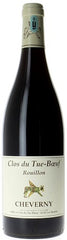
Clos de Tue-Boeuf & Thierry Puzelat
Touraine and Cheverney

BackgroundThis is an estate that has created major waves in France over the past 10 years. They are on every blackboard wine list in every cult wine bar from Paris to Tokyo via LA and NY. These wines are red hot.
Two things define the Puzelat brothers' wines : the diversity of their cuvées, and their tenacious work with nearly-extinct grape varieties that were common in the Loire not so long ago, but were put aside by the AOC for reasons having more to do with commercial simplification than quality and terroir. Vive la resistance!
Clos de Tue-Bœuf is run by two brothers, Jean-Marie and Thierry Puzelat, who tend their 10-hectare family estate in Les Montils (in the Cheverny AOC) and rent 6 hectares in a village nearby, in the Touraine AOC. The region, near the hunting grounds of Sologne, has always used a wide variety of grapes. The brothers were lucky: their father had always worked Clos du Tue Boeuf with a very limited range of organic products and so the soils are alive; he also had never machine-harvested his vineyards or used industrial yeasts. The result wines are vibrant, translucent, and explosively flavourful, they're so delicious they should come with a warning.
Thierry would have liked to expand the Clos du Tue Boeuf, by renting or buying more vineyards but his brother Jean-Marie, single and in his late forties, did not want to add more vineyard and cellar work to his already heavy schedule. So Thierry started a separate business under his own name, set up a winery in the village of Monthou-on-Bièvre, and sourced excellent vineyards and growers to buy their grapes.
True to his conviction that good wine is made from healthy grapes, he has selected grape growers who farm their plots organically and bio-dynamic for some and so he now offers a range of local wines, both from Touraine and Cheverny. They are naturally every bit as good and interesting as those of Clos de Tue Boeuf.
WineThese wines are what are currently referred to as ‘natural’ wines. The grapes are grown biologically and the wine is made totally naturally without any chemical additions. Wines like these are diaphanous but can be fragile and I have taken every care to bring them to Australia.
Jacky Marteau
Touraine

Also known as Domaine de la Bergerie, this estate was originally established at the beginning of the 20th Century and is located in Pouille, in the middle of the Touraine appellation (which itself lies in the centre of the Loire Valley) and close to the city of Tours. Jacky is a shy and thoughtful man who is mostly interested in his vineyards where he spends a great deal of time. He restricts yields which gives all his wines a concentration that is impressive, and when aligned to his deft touch in the cellar the result is distinguished, particularly amongst his peers who must tire of seeing him pick up all the gold medals at the local agricultural shows, not that you will find any stuck on his bottles. He doesn't do that.
Jacky Marteau's vines are planted on some of the finest sites of the Touraine - a series of south-facing pebble and flint slopes on the south bank of the river Cher. Jacky now has his eager son Rodolphe working with him on the estate that consists of 25 hectares of vines that include 12 of Sauvignon Blanc and 8 of Gamay. The vineyards are run according to the Terra Vitis rules of Lutte Raisonnee, or environmentally friendly viticulture, with grapes picked fully ripe - a relatively easy task in the 2008 vintage which was so good for Sauvignon in the Loire
This is a first class source of wine and like all other growers in the portfolio immaculate viticulture, pristine cellar hygiene and fastidious attention to detail are the cornerstones. For the production of Marteaus' Sauvignon Blanc, all the grapes are hand-harvested and after crushing they are macerated for 48 hours before the onset of fermentation. The must is then handled by gravity at all stages. After fermentation has finished the wine then ages on its lees for a short period before it is bottled by hand using a light filtration but avoiding any excessive mechanical manipulation that would unsettle it.
Matthias et Emile Roblin
Sancerre

Matthias Roblin is a purposeful and passionate man. He completed his winemaking studies at the Beaune viticulture school and came home to take over 3.5 hectares belonging to his mother's side of the family.
Decanter magazine (UK) selected Matthias' 2003 Sancerre as the best white table wine to come out of the Loire in 2005 (World Wine Awards, October, 2005). Given the torrid heat of that endless summer, one in which making a fresh wine was all but impossible, this was quite the honor. Decanter then profiled Matthias in its September 2006 issue, naming him among five new faces to watch in the Sancerre appellation.
In 2006 his younger brother, Emile, joined him, and now these two work alongside their father, who, with their uncle, manages the production at Chateau de Maimbray. The boys represent the fourth generation of Roblins to make wine in Maimbray, a tiny hamlet of Sury-en-Vaux just north of the old walled, hilltop town of Sancerre.
The two generations approach winemaking differently. Matthias and Emile work extensively with lees during the élevage, whereas their father and uncle do not. Domaine Roblinís wine is richly concentrated and textured; Chateau de Maimbray's wine is lean and crisp. Maimbray the commune is known for its relatively high clay content in its chalk soils, which gives very pointed aromatics to Sauvignon Blanc and makes for powerful wines that benefit from a year or two in bottle. In essence, with Roblin Sancerre you get a pretty big mouthful of wine that has the hallmark zest and minerality for which the appellation is famous.
Matthias and Emile's holdings come from their mothers' side of the family. Currently, they farm eight hectares (19.8 acres) of Sauvignon Blanc and one and a half hectares (3.7 acres) of Pinot Noir on the hillsides of Maimbray and Sury-en-Vaux divided among 17 parcels.
Roblin is a fabulous source of Sancerre.
Jura